
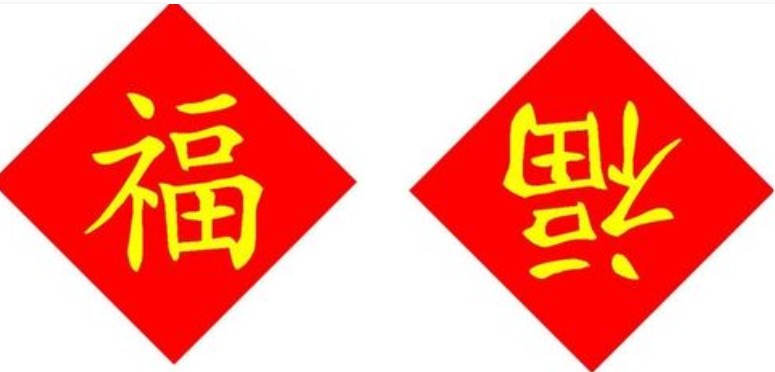
In Vietnamese culture, the character “福”, read as “Phúc”, holds a deeply meaningful place. It represents blessings, happiness, good fortune, abundance, prosperity, and a life lived in harmony. For generations, Phúc has symbolised what families most sincerely wish for one another, especially at the beginning of a new year.
During Tết Nguyên Đán, the Vietnamese Lunar New Year, many households decorate their homes with auspicious symbols, and “Phúc” is among the most cherished. It is commonly displayed on doors, gates, or walls — and quite often, it is hung upside down. This is not an error, but a deliberate and hopeful gesture.
The meaning comes from a play on words shared across Sino-Vietnamese traditions. The word for “upside down” — “đảo” / 倒 (dào) — sounds the same as “to arrive” — “đến” / 到 (dào). When “Phúc” is turned upside down, it symbolically becomes “Phúc đến” — “blessings have arrived.”
By displaying Phúc in this way, families express their wish that happiness, prosperity, health, and good luck will enter their home in the new year. It reflects a belief deeply rooted in Vietnamese culture: that language, symbols, and intention have the power to invite positive energy into everyday life.
More than a decorative tradition, the upside-down Phúc embodies the spirit of Tết itself — renewal, gratitude, family unity, and hope for a better year ahead. As homes are cleaned, ancestors honoured, and doors opened to welcome the new spring, Phúc is already there, quietly announcing that good fortune has come home. 🌸🏮