
The Customs, Energy and Contradictions That Fascinate the World
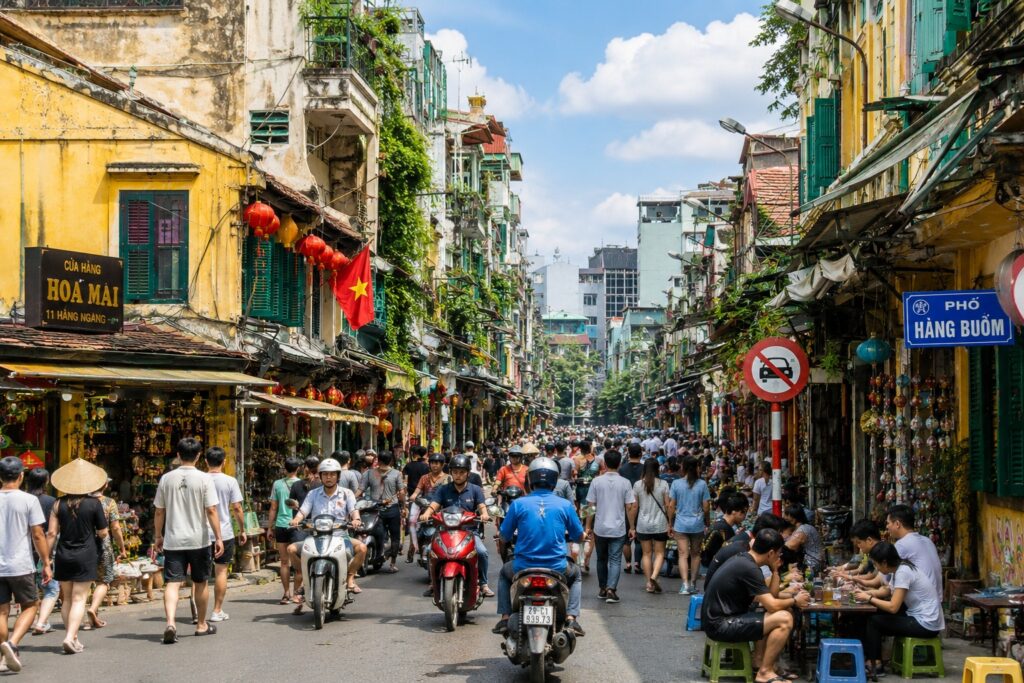
A Country That Rarely Leaves People Indifferent
There are countries that travellers enjoy, countries they admire, and countries they remember fondly for a season before daily life slowly replaces the memory. Then some countries stay under the skin long after the journey has ended. Vietnam belongs firmly to the second category.
For many foreigners — whether from Europe, North America, East Asia, Southeast Asia, or elsewhere — Vietnam is not simply a destination. It is an experience that overwhelms the senses, challenges expectations, and creates emotional reactions that are surprisingly difficult to describe. Some people arrive and immediately fall in love with the atmosphere. Others feel confused, exhausted, or culturally disoriented at first. Yet even those who struggle initially often find themselves thinking about Vietnam months or years later.
What exactly creates this effect?
Part of the answer lies in the country’s extraordinary contrasts. Vietnam combines deep-rooted traditions with astonishingly rapid modernisation. Ancient ancestor worship exists alongside livestream shopping and smartphone culture. Tiny pavement noodle stalls operate beneath giant LED advertisements. Entire families gather for elaborate ceremonial meals while teenagers edit TikTok videos nearby. It is a country where people move fast, work hard, adapt quickly, and maintain traditions that outsiders often assume would have disappeared long ago.
Foreign visitors are frequently captivated by Vietnam’s intensity. The streets feel alive from dawn until late at night. Cafés overflow with conversation. Motorbikes stream through intersections in endless waves. Markets operate with remarkable energy. Families gather in large groups to eat, celebrate, negotiate, and socialise.
Yet beyond the visual spectacle, what truly fascinates foreigners are the social customs and ways of thinking that shape Vietnamese daily life.
Visitors often discover that Vietnam operates according to cultural values very different from those they expected. Ideas about family, age, respect, money, work, privacy, relationships, and social harmony are not always the same as those found in Western societies — or even elsewhere in Asia.
To many outsiders, Vietnam feels deeply human. It can be chaotic, contradictory, noisy, emotional, practical, ambitious, warm, and exhausting all at once.
This combination is precisely what makes the country unforgettable.
The First Shock: The Streets Never Seem to Sleep
One of the very first things foreigners notice in Vietnam is the sheer energy of the streets.
Whether arriving in Hanoi, Ho Chi Minh City, Da Nang, Can Tho, or even smaller provincial towns, many visitors experience an immediate sensory overload. Motorbikes dominate the roads in numbers that seem almost impossible to comprehend. Pavements transform into temporary cafés, workshops, parking areas, restaurants, barber shops, or family gathering spaces.
In many Western cities, public space is heavily regulated and clearly organised. In Vietnam, public space feels fluid.
A pavement may serve five purposes within a single day.
A tiny plastic stool beside the road may become:
- a breakfast café at dawn,
- a noodle restaurant at lunch,
- a fruit stall in the afternoon,
- a beer gathering spot in the evening,
- and a late-night social corner before midnight.
To foreigners, this creates the impression that the entire country is permanently in motion.
Even travellers from highly urbanised Asian countries such as Japan, South Korea, Singapore, or China often find Vietnam unusually intense. The movement is not only physical but social. Conversations spill into public spaces. People call to one another from across the street. Shopkeepers negotiate loudly. Families dine outdoors late into the evening.
For some visitors, the atmosphere initially appears chaotic. Yet many gradually realise there is a hidden rhythm beneath the apparent disorder.
Crossing the street in Vietnam illustrates this perfectly.
At first, foreigners often stand frozen at the edge of the road, terrified by the rivers of approaching motorbikes. Then they learn the unwritten rule: move slowly, predictably, and continuously. The traffic flows around you.
This moment becomes symbolic of Vietnam itself.
Many foreigners discover that the country functions not through rigid order, but through constant adaptation.
The Fascination of Vietnamese Food Culture
Vietnamese cuisine is one of the strongest reasons foreigners become emotionally attached to the country.
Yet what fascinates visitors is not only the flavour of the food itself. It is the entire social culture surrounding eating.
In much of the West, meals are increasingly individualised. People order separate dishes, eat quickly, or dine alone. In Vietnam, food remains deeply collective.
At a traditional Vietnamese meal, dishes are placed in the centre of the table and shared communally. Rice bowls, soups, vegetables, herbs, grilled meats, fish sauces, and side dishes circulate constantly among family members and friends.
Foreigners often describe Vietnamese meals as warm and intimate because everyone participates together.
Even simple meals feel social.
Street food culture fascinates outsiders even more.
Many travellers are astonished by how much daily life takes place on pavements and roadside stalls. Tiny kitchens produce food of remarkable quality and complexity. Plastic chairs no higher than a child’s toy become the setting for unforgettable meals.
Visitors are often surprised that some of the best food in Vietnam may come from places that appear extremely modest.
A grandmother preparing pho from a steaming pot at dawn.
A man grilling pork beside a busy road.
A woman selling banh xeo from a tiny corner kitchen.
The apparent simplicity hides years or even generations of skill.
Foreigners also become fascinated by the balance of Vietnamese flavours:
- fresh herbs,
- sour lime,
- salty fish sauce,
- sweetness,
- chilli heat,
- and aromatic broths.
Unlike some cuisines that rely heavily on oil or intense spice, Vietnamese food often feels fresh and layered.
Even travellers from neighbouring Asian countries frequently comment on how distinctive Vietnam’s culinary identity feels.
Another cultural surprise is the timing of meals.
Many Vietnamese people begin eating breakfast extremely early. By six o’clock in the morning, noodle stalls and cafés are already crowded. Foreigners unused to this rhythm are amazed to see entire streets active before sunrise.
Meanwhile, evening meals may stretch late into the night, especially during gatherings involving alcohol, seafood, or celebrations.
Food in Vietnam is rarely treated as merely functional.
It is social glue.
The Central Role of Family
Perhaps the single most important cultural difference foreigners notice in Vietnam is the importance of family.
In many Western societies, independence is considered one of the highest adult values. Young people are expected to leave home, make individual decisions, and pursue personal goals.
Vietnamese society traditionally places much greater emphasis on collective family responsibility.
This affects almost every aspect of life:
- career decisions,
- marriage,
- financial planning,
- housing,
- childcare,
- and even social reputation.
Foreigners are often surprised by how interconnected Vietnamese families remain even when adult children have careers, marriages, or children of their own.
Several generations may live in the same house or very close together.
Grandparents frequently help raise children.
Adult children may feel strong obligations to support ageing parents financially.
Family approval can carry enormous weight.
To outsiders from highly individualistic societies, this can appear both admirable and restrictive.
Many foreigners deeply admire the loyalty and practical support within Vietnamese families. Elderly relatives are often integrated into daily life rather than isolated.
At the same time, some visitors observe that social pressure from family expectations can be intense.
Questions about marriage, income, education, or children are not merely personal matters; they may be viewed as collective family concerns.
Foreigners sometimes misunderstand this dynamic.
What may appear intrusive from a Western perspective is often interpreted within Vietnam as care, responsibility, or social involvement.
The concept of family reputation also remains important.
A person’s behaviour reflects not only upon themselves but also upon their parents, relatives, and even ancestors.
This sense of interconnected identity shapes Vietnamese society in ways that many foreigners find fascinating.
Respect for Age and Hierarchy
Another major cultural difference that attracts foreign attention is the Vietnamese approach to age and hierarchy.
Vietnamese society places strong emphasis on respect for elders.
Age influences:
- language,
- greetings,
- seating arrangements,
- decision-making,
- and social expectations.
Even the Vietnamese language itself reflects this hierarchy. Pronouns change depending on relative age and relationship. People rarely use a single universal word equivalent to the English “you”. Instead, forms of address communicate social position and respect.
Foreigners learning Vietnamese quickly realise that language cannot easily be separated from social structure.
Many Western visitors initially struggle with this system because they come from societies where equality and informality are emphasised.
In Vietnam, however, showing respect to older people is considered basic politeness.
At family gatherings, younger people may pour drinks for elders first.
Important family decisions are often discussed with senior relatives.
Older people may receive visible deference in public settings.
For some foreigners, especially from cultures with weaker intergenerational ties, this atmosphere feels surprisingly warm and stable.
Others may feel uncomfortable with the degree of hierarchy involved.
Yet even critics often admit that Vietnamese respect for elders preserves forms of social cohesion that have weakened elsewhere.
Interestingly, modern Vietnam also displays contradictions.
Young Vietnamese people are often technologically advanced, globally connected, and heavily influenced by international trends. Yet many still maintain traditional patterns of respect at home.
Foreign visitors frequently find this combination of modern youth culture and traditional hierarchy deeply intriguing.
The Obsession with Hard Work and Progress
One characteristic many foreigners notice in Vietnam is the extraordinary work ethic visible throughout society.
People appear constantly busy.
Shops open early and close late.
Families operate small businesses seven days a week.
Students attend school, private lessons, and language classes.
Street vendors work under intense heat.
Construction continues at a remarkable speed.
Cafés remain crowded with freelancers, office workers, students, and entrepreneurs.
Foreign visitors often describe Vietnam as a country driven by ambition.
This impression is especially strong among travellers who return after several years and witness a dramatic urban transformation.
New apartment towers rise rapidly.
Motorbike ownership expands.
Middle-class lifestyles become increasingly visible.
International brands appear alongside local businesses.
Many outsiders sense that Vietnam is a country determined to improve economically.
Historical context matters here.
Vietnam experienced war, poverty, international isolation, and economic hardship within living memory. The rapid economic development of recent decades, therefore, carries emotional significance for many Vietnamese people.
Foreigners frequently notice strong practical attitudes towards money and opportunity.
Parents invest heavily in education.
Young professionals pursue additional qualifications.
Families save aggressively.
Entrepreneurial activity is everywhere.
To many visitors, this creates a national atmosphere of momentum.
Even foreigners from wealthier countries sometimes feel inspired by the visible determination they encounter.
Vietnamese Café Culture: More Than Coffee
Foreigners often arrive in Vietnam expecting good coffee.
What they do not expect is the extraordinary social role cafés play in daily life.
Vietnamese café culture is unlike that of many Western countries.
In much of Europe or North America, cafés may function as quick stops between activities. In Vietnam, cafés often become destinations in themselves.
People sit for long periods.
They watch the street.
They talk with friends.
They work remotely.
They study.
They smoke, relax, flirt, negotiate business deals, or simply pass time.
Many foreigners become fascinated by how comfortable Vietnamese people seem with simply sitting and observing life.
The atmosphere can vary enormously:
- minimalist modern cafés,
- hidden garden cafés,
- old apartment cafés,
- roadside coffee stalls,
- acoustic music cafés,
- student cafés,
- luxury chains,
- or tiny family-run places with plastic chairs.
Vietnamese coffee itself also surprises many visitors.
Strong robusta beans, condensed milk, egg coffee, coconut coffee, yoghurt coffee, and iced coffee variations create flavours very different from the espresso culture familiar to many Europeans.
But beyond the drink, foreigners often feel café culture reveals something deeper about Vietnamese society.
Despite the country’s intense work ethic, there remains a visible social culture of pausing, gathering, and observing.
The café becomes a public living room.
Questions That Shock Foreigners
One cultural difference frequently mentioned by foreigners concerns personal questions.
In many Western societies, questions about:
- age,
- salary,
- relationship status,
- weight,
- income,
- or plans for children
may be considered private or even rude.
In Vietnam, such questions can appear remarkably quickly during conversations.
Foreign visitors are often startled when someone they have just met asks:
“How old are you?”
“Why aren’t you married?”
“How much do you earn?”
“When will you have children?”
“Why are you so thin?”
“Why are you fat now?”
To outsiders, these questions may initially feel intrusive.
Yet within Vietnamese culture, they are often interpreted less as invasions of privacy and more as socially normal forms of interaction.
People use such information to understand social relationships, age hierarchy, life stage, or family expectations.
Foreigners who spend longer periods in Vietnam often gradually adapt to this conversational style, though many never fully become comfortable with it.
At the same time, Vietnamese people themselves increasingly debate changing attitudes towards privacy, especially among younger urban generations.
Modernisation and global influence are reshaping social norms.
Nevertheless, direct personal questioning remains one of the most memorable cultural surprises for visitors.
Ancestor Worship and Everyday Spirituality
The visibility of spiritual practices in Vietnam deeply strikes many foreigners.
Unlike in societies where religion may be largely confined to formal places of worship, Vietnamese spirituality often appears integrated into everyday life.
Small altars can be found:
- inside homes,
- inside shops,
- in restaurants,
- at reception desks,
- in offices,
- or beside entrances.
These altars frequently include:
- incense,
- fruit,
- flowers,
- tea,
- rice wine,
- photographs,
- or symbolic offerings.
Ancestor worship remains especially important.
Many Vietnamese families maintain rituals honouring deceased relatives, particularly during anniversaries, Lunar New Year celebrations, or special occasions.
Foreigners are often moved by the sense that the dead remain symbolically present within family life.
The spiritual atmosphere of Vietnam also fascinates visitors because it blends multiple traditions:
- Buddhism,
- folk religion,
- Taoist influences,
- Confucian values,
- ancestor worship,
- and local spiritual beliefs.
In practice, many Vietnamese people move comfortably between these traditions without strict separation.
A person may visit a pagoda, maintain ancestral rituals, consult fortune traditions, and participate in modern urban life simultaneously.
To many outsiders, this creates a spirituality that feels practical rather than purely doctrinal.
It is woven into the daily routine.
Weddings, Celebrations and Collective Joy
Vietnamese weddings astonish many foreigners.
They are often large, elaborate, energetic, and highly social.
Hundreds of guests may attend.
Multiple ceremonies may take place.
Professional photography sessions can become extremely elaborate.
Families invest significant money and emotional energy into wedding celebrations.
Foreign visitors are often surprised by the scale of these events.
The atmosphere may combine:
- traditional rituals,
- modern fashion,
- karaoke,
- formal banquets,
- extended family gatherings,
- and enormous quantities of food and alcohol.
The social dimension is central.
Weddings are not merely about two individuals.
They represent the joining of families and social networks.
Funerals can also be surprisingly elaborate and communal.
Foreigners sometimes notice that Vietnamese society maintains strong collective rituals around major life events.
Birthdays, ancestor commemorations, Lunar New Year celebrations, business openings, and family anniversaries often involve extensive social participation.
Compared with more individualised societies, Vietnam can feel intensely communal.
The Remarkable Flexibility of Daily Rules
One of the most frustrating — yet strangely fascinating — aspects of Vietnam for foreigners is the flexible relationship many people appear to have with rules.
Traffic rules may function more as guidelines than absolute laws.
Parking arrangements adapt constantly.
Queues may not operate according to strict order.
Business negotiations can change rapidly.
Schedules sometimes remain fluid.
At first, foreigners from highly regulated societies may find this maddening.
Yet over time, many recognise that Vietnam’s flexibility also contributes to its adaptability.
People improvise.
They negotiate.
They adjust.
They find practical solutions quickly.
This flexibility can create inefficiency and stress, but it also produces resilience.
Many visitors eventually conclude that Vietnam functions through social negotiation rather than rigid systems.
Once foreigners understand this, daily life often becomes less frustrating and more comprehensible.
The North–South Contrast
Another feature that fascinates foreigners is the diversity within Vietnam itself.
Many first-time visitors mistakenly imagine Vietnam as culturally uniform.
In reality, significant regional differences exist.
Hanoi in the north often feels more formal, traditional, political, and historically layered.
Ho Chi Minh City in the south tends to appear faster, more commercially driven, more international, and more openly entrepreneurial.
Central Vietnam possesses distinct accents, cuisine, and historical identity.
The Mekong Delta has its own slower rhythms and river-based culture.
Foreigners travelling through the country frequently become fascinated by how dramatically the atmosphere changes between regions.
Even Vietnamese humour, food preferences, communication styles, and social behaviour may vary.
This diversity makes long-term travel through Vietnam especially rewarding.
Why Vietnam Feels “Authentic” to Many Travellers
One phrase frequently used by foreigners to describe Vietnam is “authentic”.
This word is complicated and sometimes problematic, yet it appears constantly in travel conversations.
Why?
Partly because many visitors feel Vietnam has not been completely redesigned for foreign tourism.
Of course, tourism exists everywhere.
Yet outside heavily touristic districts, much daily life still appears to function primarily for local people rather than visitors.
Markets serve residents.
Street food stalls feed workers.
Families occupy public spaces naturally.
Foreigners often feel they are observing real daily life rather than carefully staged performances.
This impression can create powerful emotional reactions.
Travellers accustomed to heavily commercialised tourism sometimes find Vietnam refreshingly alive and unpredictable.
Not always comfortable.
Not always convenient.
But deeply real.
The Emotional Complexity of Vietnam
Perhaps what fascinates foreigners most is that Vietnam resists simple description.
The country is beautiful, but also harsh.
Warm, yet sometimes blunt.
Collective, yet highly competitive.
Traditional, yet rapidly modernising.
Relaxed in some situations and intensely driven in others.
Foreigners often describe emotional contradictions:
- exhaustion and excitement,
- frustration and affection,
- confusion and admiration.
Many travellers say Vietnam challenged their assumptions about happiness, success, modernity, and community.
People with modest incomes may still gather nightly with friends and family for long social meals.
Grandparents remain integrated into daily life.
Public spaces feel socially alive.
At the same time, economic ambition is everywhere.
This complexity makes Vietnam difficult to reduce to stereotypes.
The Influence of History
Foreigners who learn more about Vietnamese history often become even more fascinated by the country.
Vietnam has experienced:
- centuries of foreign domination,
- dynastic conflicts,
- colonialism,
- devastating wars,
- partition,
- economic hardship,
- and rapid post-war transformation.
Yet despite these experiences, many visitors perceive extraordinary national resilience.
The younger generation in particular often appears intensely future-oriented.
There is visible pride in development and progress.
At the same time, memories of past hardship remain present in family histories.
Foreigners frequently notice that older generations may speak about sacrifice, survival, and scarcity in ways that younger people raised during economic growth cannot fully imagine.
This coexistence of historical memory and future ambition contributes greatly to Vietnam’s unique atmosphere.
Modernisation Without Complete Westernisation
One aspect of Vietnam that fascinates both Asian and Western visitors is how modernisation has unfolded without complete cultural Westernisation.
Skyscrapers, smartphones, digital banking, online shopping, and global fashion trends are everywhere.
Yet many traditional social structures remain surprisingly strong.
Family influence remains central.
Ancestor worship continues.
Traditional holidays matter deeply.
Respect for elders survives.
Communal eating culture persists.
Foreigners often expect rapid economic development to erase traditional culture.
Vietnam challenges this assumption.
Instead, the country frequently appears to absorb global influences while maintaining a distinctive local identity.
Young Vietnamese people may wear international fashion brands, consume Korean pop culture, study English online, and operate digital businesses — while still participating in ancestral rituals at home.
This coexistence fascinates outsiders.
Why Foreigners Keep Returning
Many travellers visit Vietnam once and then return repeatedly.
Some eventually settle there for years.
Why?
Partly because Vietnam offers layers.
The country changes depending on how deeply one engages with it.
A short tourist trip may reveal:
- beautiful landscapes,
- delicious food,
- busy cities,
- and affordable travel.
Longer stays reveal something far more complex:
- social structures,
- family expectations,
- regional identities,
- historical memory,
- and emotional subtleties.
Foreigners often say that Vietnam becomes more interesting the longer one remains.
The country rewards patience.
Many visitors eventually develop favourite cafés, favourite noodle stalls, familiar market vendors, or local routines.
The initial shock gradually transforms into attachment.
Even frustrations sometimes become part of the affection.
The Country of Contradictions
In the end, perhaps Vietnam fascinates foreigners precisely because it refuses to fit comfortably into simple categories.
It is neither entirely traditional nor entirely modern.
Neither fully orderly nor fully chaotic.
Neither completely collectivist nor purely individualistic.
Vietnam contains tensions that remain visible in everyday life.
A luxurious sports car is parked beside a woman carrying vegetables on a bicycle.
A centuries-old pagoda stands beneath modern apartment towers.
Teenagers dancing to global pop music before returning home for ancestral rituals.
Street vendors are using smartphones to receive digital payments.
Families gather for huge communal meals while everyone simultaneously checks social media.
Foreigners often feel that Vietnam reveals a society negotiating change in real time.
And perhaps that is why the country leaves such a strong impression.
Vietnam does not merely present itself to visitors.
It confronts them with movement, contradiction, adaptation, warmth, ambition, memory, and intensity.
Some travellers find this exhausting.
Many find it unforgettable.
For both Western and Asian foreigners alike, Vietnam often becomes more than a place visited.
It becomes a place constantly remembered.
And long after the journey ends, many discover that certain sounds, smells, flavours, or street scenes from Vietnam continue returning unexpectedly to the mind:
the smell of coffee and rain at dawn,
the sound of distant karaoke,
the blur of motorbikes at sunset,
the steam rising from a bowl of pho,
a grandmother burning incense before an ancestral altar,
families eating together on tiny plastic stools beside the road.
These images remain because Vietnam feels vividly alive.
That vitality — messy, emotional, ambitious, communal, contradictory, and deeply human — is what fascinates foreigners most of all.