
Sacred Traditions, Festivals, Gastronomy and the Spectacular Ngo Boat Races
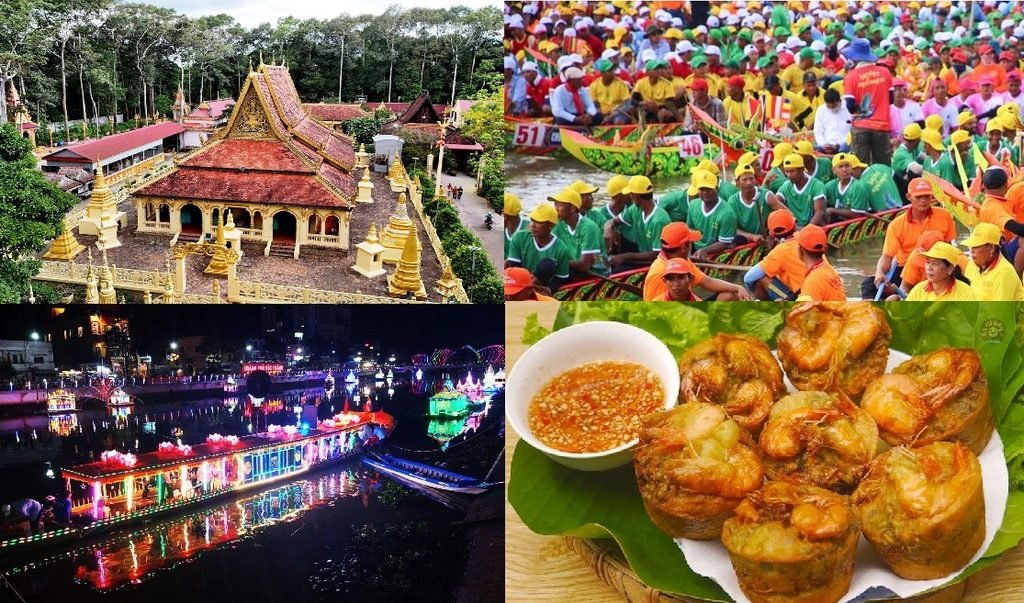
Exploring the history, religious beliefs, traditional celebrations and living cultural identity of the Khmer communities of the Mekong Delta.
Introduction: A distinctive cultural heritage in the heart of the Mekong Delta
The Mekong Delta, in southern Vietnam, is a region whose identity has been shaped by the interaction between geography, history and the cultural traditions of its different communities. Its extensive network of rivers and canals, fertile alluvial plains, rice-growing landscapes and coastal settlements have provided the setting for centuries of agricultural development, commercial exchange and cultural interaction.
Beyond its familiar landscapes and economic importance, however, the delta possesses an exceptionally rich cultural heritage. Among the communities that have contributed to its historical development, the Khmer occupy a particularly significant place. Their presence is especially prominent in the territories historically associated with Sóc Trăng and Trà Vinh, as well as in An Giang, Kiên Giang and other parts of the southern delta.
The Khmer communities of Southern Vietnam, frequently referred to as Khmer Krom, have maintained a distinctive cultural identity characterised by their language, religious practices, traditional architecture, music, performing arts, cuisine and communal celebrations. Their cultural heritage reflects historical connections with the wider Khmer world, particularly Cambodia, while also demonstrating the influence of centuries of coexistence with Vietnamese and Chinese communities.
Among their most important annual celebrations is Oóc Om Bóc, the traditional Moon Worship Festival, whose spectacular public expression includes the celebrated Đua ghe Ngo, or traditional Khmer longboat races.
The festival provides an ideal opportunity to explore a cultural world in which religious devotion, agricultural traditions, community solidarity and artistic expression remain closely interconnected.
1. The Khmer people: History, identity and settlement in Southern Vietnam
The historical presence of Khmer communities in the Mekong Delta is closely associated with the wider development of Khmer civilisation in the lower Mekong basin.
Long before the establishment of contemporary national and provincial boundaries, the delta formed part of a wider geographical and cultural environment connected to the historical Khmer territories of mainland Southeast Asia.
The Khmer population of Southern Vietnam is commonly known as Khmer Krom, a designation associated with the Khmer-speaking communities of the lower Mekong region. Their historical experience is distinct from that of the Khmer majority in Cambodia, although linguistic, religious and cultural connections remain particularly strong.
According to Vietnam’s 2019 Population and Housing Census, the Khmer ethnic group numbered approximately 1.32 million people nationally. Their distribution is particularly concentrated in the Mekong Delta, where Sóc Trăng and Trà Vinh were historically among the principal centres of Khmer settlement.
Traditional Khmer social organisation has been closely associated with the concepts of phum and sóc. A phum generally refers to a residential cluster or village community, while sóc traditionally denotes a wider settlement or community organisation. These concepts reflect the importance of local relationships, shared religious institutions and collective identity.
Agriculture, particularly rice cultivation, has traditionally provided the economic foundation of many Khmer communities. Fishing, aquaculture, horticulture and small-scale trading have also contributed to their livelihoods.
Nevertheless, Khmer cultural identity cannot be understood solely through its agricultural background. Religion, collective memory, traditional knowledge and the transmission of cultural practices between generations have been equally important in maintaining the continuity of these communities.
2. Theravada Buddhism: The spiritual foundation of Khmer society
Perhaps the most defining characteristic of Khmer cultural life in Southern Vietnam is the profound influence of Theravada Buddhism.
Unlike the predominantly Mahayana Buddhist traditions historically associated with much of Vietnamese religious life, the Khmer communities of the Mekong Delta have traditionally followed Theravada Buddhism, sharing important religious and cultural connections with Cambodia, Thailand, Laos and Myanmar.
The Buddhist pagoda, known locally as chùa Khmer, occupies a central position in community life. It is not simply a place of worship but also an institution for education, cultural transmission, social interaction and the preservation of traditional values.
Many Khmer boys traditionally spend part of their youth studying at a Buddhist monastery, where they receive religious instruction, learn moral principles and acquire knowledge of Buddhist texts and Khmer cultural traditions. Although contemporary educational and social patterns have evolved, the monastery continues to play an important role in the spiritual life of many communities.
Khmer pagodas are also among the most distinctive architectural landmarks of the Mekong Delta.
Their elaborate roofs, colourful façades, sculptural ornamentation and symbolic representations of Buddhist cosmology reflect a sophisticated artistic tradition. Mythological creatures, nāgas, floral motifs and representations of the Buddha frequently appear in their decorative programmes.
Two particularly notable examples are Âng Pagoda, located beside the picturesque Ao Bà Om lake in Trà Vinh, and Kh’leang Pagoda in Sóc Trăng.
These establishments illustrate how religious architecture functions simultaneously as an expression of spiritual devotion, artistic creativity and communal identity.
The influence of Buddhism also extends into everyday behaviour, family relationships, funeral ceremonies, charitable activities and the observance of traditional festivals. The concepts of merit-making, compassion, respect for elders and moral responsibility remain important elements of Khmer social and religious values.
3. The traditional Khmer festivals: A calendar of faith and community
The traditional Khmer calendar is marked by several important celebrations that combine Buddhist observances, ancestral remembrance and agricultural symbolism.
Three festivals occupy a particularly prominent position: Chol Chnam Thmay, Sene Dolta and Oóc Om Bóc.
Chol Chnam Thmay: The Khmer New Year
Usually celebrated in April, Chol Chnam Thmay marks the beginning of the traditional Khmer New Year.
It is one of the most important occasions for family reunions and religious observance. Communities visit their local pagodas, make offerings to monks, participate in purification rituals and pay respect to older family members.
Traditional activities include the washing of Buddha images, the construction of symbolic sand stupas and the preparation of offerings intended to accumulate merit and bring good fortune for the coming year.
The celebration is also accompanied by traditional games, music, dance and communal festivities.
Sene Dolta: Honouring the ancestors
Sene Dolta, also known as the Khmer Ancestors’ Festival, is devoted to remembering deceased relatives and expressing gratitude towards previous generations.
Families visit Buddhist pagodas to make food offerings and participate in ceremonies intended to transfer merit to their ancestors.
The celebration reflects the importance of family continuity, filial respect and the relationship between the living and the deceased within traditional Khmer beliefs.
Although Buddhist teachings provide its principal religious framework, the festival also preserves older cultural customs associated with ancestral remembrance.
Oóc Om Bóc: Giving thanks to the Moon
Oóc Om Bóc, traditionally celebrated during the full moon of the tenth lunar month, usually in October or November, brings together religious devotion, agricultural symbolism and communal celebration.
Its importance is particularly evident in the Khmer communities of Sóc Trăng and Trà Vinh, where the festival remains one of the most distinctive expressions of local cultural identity.
Unlike the more family-oriented observances of the New Year and Sene Dolta, Oóc Om Bóc has developed into a major public celebration involving religious ceremonies, traditional performances, water lanterns and spectacular boat races.
4. Oóc Om Bóc: The Moon Worship Festival
Oóc Om Bóc is deeply rooted in the traditional relationship between the Khmer people, the natural environment and the agricultural calendar.
The moon occupies an important symbolic position in traditional Khmer cosmology. It is associated with the regulation of natural cycles, weather conditions and agricultural prosperity. Its influence is particularly significant in societies whose livelihoods have historically depended on rice cultivation and seasonal rainfall.
The festival is therefore an occasion to express gratitude for the year’s harvest and to seek favourable conditions for the coming agricultural cycle.
The central religious ceremony is known as Lễ Cúng Trăng, the Moon Worship ceremony. Families and community members gather at Buddhist pagodas or other communal locations to prepare offerings and participate in traditional rituals.
These offerings typically include fruit, coconuts, sweet potatoes, bananas and other agricultural products. One preparation, however, possesses particular cultural significance: cốm dẹp.
Cốm dẹp is made from young glutinous rice harvested before the grains have fully matured. The rice is roasted and subsequently pounded to produce flattened grains with a distinctive texture and delicate flavour.
The preparation itself reflects traditional agricultural knowledge and the importance of rice within Khmer culinary culture.
One particularly interesting element of the Moon Worship ceremony is the ritual feeding of young children with cốm dẹp. An Achar, a traditional religious officiant who assists in conducting ceremonies, offers the rice to children while asking about their wishes and aspirations. This symbolic gesture expresses hopes for good health, educational success, prosperity and a favourable future.
The ceremony thus combines religious symbolism with the transmission of cultural values between generations.
Water lanterns and the Loi Protip tradition
Another visually striking component of Oóc Om Bóc is the traditional water lantern ceremony known as Lôi Protip.
Illuminated floating structures are released onto rivers and waterways, creating an extraordinary spectacle after sunset.
These ceremonies are associated with expressions of gratitude and respect towards the natural elements, particularly water, which has sustained the agricultural and economic life of the Mekong Delta for centuries.
The floating lanterns, their reflections on the water and the surrounding traditional music create an atmosphere that combines religious symbolism with popular celebration.
The festival may also feature ghe Cà Hâu, elaborately decorated traditional ceremonial boats associated with the river processions and cultural performances.
Together, these traditions demonstrate the importance of waterways not merely as geographical features but as essential elements of Khmer spiritual and cultural imagination.
5. Đua ghe Ngo: The spectacular Khmer longboat races
Among all the activities associated with Oóc Om Bóc, the Đua ghe Ngo races are undoubtedly the most spectacular.
The ghe Ngo is a long, narrow traditional racing boat, traditionally constructed from wood and associated with the Buddhist pagodas and communities of the Khmer population.
Each boat has its own identity, often reflected in its colours, decorative motifs and distinctive prow. Mythological animals and sacred representations, including nāgas, dragons and other symbolic creatures, frequently feature in their ornamentation.
The boats are regarded as important communal possessions, traditionally maintained and cared for through the institutions of the local pagoda.
Their significance extends well beyond their practical function as racing vessels. They represent the identity, prestige and collective pride of the phum sóc and the religious community associated with them.
Construction, preparation and teamwork
The preparation of a ghe Ngo is a demanding undertaking requiring traditional craftsmanship and considerable technical knowledge.
The long, streamlined hull is designed to accommodate large rowing crews, with paddlers arranged in two longitudinal rows. Depending on the boat and competition regulations, a crew may comprise several dozen rowers.
The construction and maintenance of these vessels involve knowledge passed down through generations, while their decoration frequently reflects the artistic traditions of Khmer communities.
Training is equally important.
Crews practise for extended periods, developing the strength, coordination and discipline necessary to propel the boat at considerable speed. Synchronisation is essential: every paddler must follow the rhythm established by the crew leaders and the person responsible for maintaining the pace.
When the starting signal sounds, dozens of paddles strike the water almost simultaneously. The result is a remarkable display of physical strength and collective coordination.
The noise of the drums, the rhythm of the paddles and the enthusiastic encouragement of spectators create an atmosphere that is difficult to compare with conventional sporting competitions.
The races on the Maspero River
Sóc Trăng has historically been the principal centre of the most important Khmer boat-racing celebrations in Southern Vietnam.
The Maspero River provides the setting for the major competitions, attracting teams representing different pagodas and communities from across the Mekong Delta.
The races are organised into men’s and women’s competitions, with crews competing over different distances according to the applicable regulations.
The event is not simply a sporting contest. It is a powerful expression of communal solidarity, cultural pride and the continuity of traditional knowledge.
For many participants, representing their pagoda is an honour that involves a strong sense of responsibility towards their community.
The competition also provides an important occasion for younger generations to become involved in traditional cultural practices, strengthening the links between religious institutions, families and local communities.
6. Khmer gastronomy: The flavours of the Mekong Delta
Food is another essential expression of Khmer cultural identity.
The cuisine of the Khmer communities in Southern Vietnam reflects the agricultural and ecological characteristics of the Mekong Delta, combining rice, freshwater fish, coconut, vegetables, aromatic herbs and fermented ingredients.
Its distinctive flavours have developed through centuries of interaction with Vietnamese and Chinese culinary traditions, while retaining recognisable connections with the wider gastronomic culture of Cambodia.
Rather than viewing Khmer cuisine as an isolated culinary system, it is more accurate to understand it as part of a dynamic regional food culture in which different communities have influenced one another.
Several preparations deserve particular attention.
Bún nước lèo
One of the most representative dishes associated with Sóc Trăng is bún nước lèo.
This aromatic noodle soup is traditionally prepared with a broth incorporating fermented fish paste, freshwater fish and a variety of herbs and vegetables. Depending on the local recipe, ingredients such as lemongrass and other aromatic seasonings contribute to its characteristic flavour.
The dish illustrates the importance of fermentation and freshwater resources in the culinary traditions of the delta.
Although associated with the wider Khmer, Vietnamese and Chinese gastronomic environment of the region, its preparation reflects particularly strong Khmer culinary influences.
Bánh cống
Bánh cống is another well-known speciality of Sóc Trăng.
These small, deep-fried cakes are prepared using a mixture based on rice flour, mung beans and prawns, traditionally cooked in small cylindrical moulds.
Their crisp exterior and softer interior make them a popular street-food preparation, often served with fresh herbs and dipping sauce.
Cốm dẹp
Cốm dẹp deserves special attention because of its close association with Oóc Om Bóc.
Prepared from young glutinous rice, it may be mixed with grated coconut and sugar to produce a sweet preparation that combines the natural flavour of rice with the richness of coconut.
Beyond its gastronomic qualities, it represents an important connection between agricultural production, religious observance and traditional food culture.
Bánh tét
Bánh tét, the cylindrical glutinous rice cake wrapped in banana leaves, is widely consumed throughout southern Vietnam.
Different communities have developed their own recipes and variations, with fillings that may include mung beans, pork or sweet ingredients.
Its presence in Khmer celebrations illustrates the shared culinary traditions that have developed through centuries of coexistence in the Mekong Delta.
Num Banh Chok and the wider Khmer culinary connection
The Cambodian dish Num Banh Chok, consisting of rice noodles served with a traditional fish-based curry sauce and fresh vegetables, provides another interesting point of comparison.
Although its name and best-known preparations are associated particularly with Cambodia, related culinary traditions and noodle preparations can be found across the wider Khmer cultural world.
Such comparisons help illustrate the historical and cultural connections between Khmer communities on both sides of the present-day Vietnam–Cambodia border.
Ultimately, Khmer gastronomy is not simply a collection of traditional recipes. It is a reflection of local ecology, agricultural knowledge, religious celebrations and the social relationships that shape everyday life.
7. Music, dance and the traditional performing arts
Khmer cultural identity is also expressed through a rich tradition of music, dance and theatrical performance.
One of the most distinctive musical traditions is the Pin Peat ensemble, known in Southern Vietnam as ngũ âm, literally referring to five categories of sound.
Its instruments include percussion, gongs, wind instruments and other traditional musical components. The ensemble accompanies religious ceremonies, theatrical performances and important community celebrations.
Music is particularly important during festivals, when traditional rhythms provide the accompaniment to processions, dances and other ceremonial activities.
Robam and Rom Vong
The traditional Khmer performing arts include several forms of dance with different historical and social functions.
Rô băm, or Khmer classical dance-drama, is associated with elaborate costumes, stylised movements and narratives influenced by religious and epic traditions.
Its performances reflect historical connections with the wider Khmer courtly and theatrical tradition.
By contrast, Rom Vong is a more accessible social dance, traditionally performed in a circular formation during communal celebrations and festive gatherings.
The movements are generally graceful and relatively simple, allowing participants of different ages to take part.
Dù kê: Khmer musical theatre
Another important cultural expression is Dù kê, a traditional form of Khmer musical theatre that combines dialogue, singing, instrumental accompaniment, dance and dramatic storytelling.
Its repertoire includes historical narratives, popular legends, moral themes and adaptations of traditional stories.
Dù kê has played an important role in the transmission of Khmer language, collective memory and cultural values, particularly in communities where theatrical performances remain an important element of public celebrations.
Together, these artistic traditions demonstrate that Khmer culture is not simply preserved through religious institutions and festivals but also through living forms of popular expression.
8. Pagodas, traditional customs and everyday community life
The importance of Khmer cultural institutions becomes particularly evident when observing the relationship between religious life and everyday social practices.
The pagoda remains a central meeting point for many communities, providing a space for religious instruction, ceremonies, charitable activities and collective celebrations.
Traditional customs are also reflected in marriage ceremonies, funeral rites, family gatherings and the observance of important Buddhist occasions.
Respect for elders, hospitality, mutual assistance and the participation of families in community activities remain important social values.
Traditional clothing, particularly during religious celebrations and festivals, provides another visible expression of cultural identity.
Women may wear traditional silk garments and decorative scarves, while men and women alike often choose clothing that reflects the ceremonial character of particular occasions.
The Khmer language is another fundamental element of cultural continuity. It is used in family and community settings and remains closely connected with religious education, traditional literature, folk narratives and performing arts.
The transmission of language and cultural knowledge to younger generations is particularly important in an increasingly urbanised and interconnected society.
9. A changing administrative landscape: Sóc Trăng and Trà Vinh after 2025
Vietnam’s administrative reorganisation of 2025 altered the provincial map of the Mekong Delta.
The former province of Sóc Trăng was incorporated into the expanded city of Cần Thơ, together with the former province of Hậu Giang, while the former province of Trà Vinh became part of the new province of Vĩnh Long.
These changes, effective from 1 July 2025, created a new administrative framework for the region.
Nevertheless, the historical Khmer communities, their pagodas, religious institutions and cultural traditions remain rooted in their established localities.
The former territories of Sóc Trăng and Trà Vinh therefore continue to represent two particularly important centres of Khmer cultural heritage within the wider Mekong Delta.
Administrative boundaries may change, but the historical and cultural identities of their communities are not defined exclusively by provincial organisation.
Conclusion: A living cultural heritage of the Mekong Delta
The Khmer cultural heritage of Southern Vietnam represents one of the most distinctive and valuable dimensions of the Mekong Delta’s multicultural identity.
Its richness is evident in the architecture of its Buddhist pagodas, the continuity of Theravada religious practices, the celebrations of the traditional Khmer calendar, the flavours of its gastronomy and the vitality of its music, dance and theatrical traditions.
Oóc Om Bóc provides a particularly compelling illustration of this cultural continuity.
Its Moon Worship ceremony expresses gratitude towards nature and the agricultural cycles upon which traditional Khmer communities have depended for generations. The preparation of cốm dẹp connects religious symbolism with the everyday importance of rice, while the floating lanterns transform the waterways into spaces of collective celebration.
The Đua ghe Ngo races, meanwhile, demonstrate the extraordinary capacity of traditional cultural practices to bring entire communities together through teamwork, craftsmanship, shared identity and collective pride.
For visitors seeking to understand Southern Vietnam beyond its most familiar tourist destinations, the Khmer communities of Sóc Trăng, Trà Vinh and the wider Mekong Delta offer an exceptional opportunity to discover a cultural world shaped by centuries of history and interaction.
Their heritage is not a static reminder of the past, but a living tradition that continues to evolve while preserving its essential characteristics.
Ultimately, the significance of Khmer culture lies not only in its spectacular festivals or architectural landmarks, but also in the everyday practices, religious beliefs, culinary traditions and communal relationships through which successive generations have maintained their cultural identity.
It is this combination of history, spirituality, creativity and community that makes the Khmer heritage of the Mekong Delta such an important part of Vietnam’s cultural landscape.
Bibliography and References:
Lê Thị Hồng Nhung. (2013). Những biến đổi trong lễ hội Óoc Om Bóc của người Khmer ở tỉnh Sóc Trăng. Tạp chí Khoa học Xã hội, 11(183).
Ly, N. N. (2023). Guidelines for the temple architectures of the Khmer Delta in Southern Vietnam. The Journal of International Buddhist Studies College, 9(2), 15–29.
Nguyễn Đức Dũng, & Phạm Thị Chuyền. (2026). Interplay between Theravada Buddhism and the traditional beliefs of Khmer people in Vietnam. Tạp chí Nghiên cứu Văn hóa, 2(56).
Nguyen, C. K. (2011). Traditional culture of Khmer people in the South of Viet Nam (The perspective from aspect of Khmer pagoda). Science and Technology Development Journal, 14(3), 87–92. https://doi.org/10.32508/stdj.v14i3.2000
Nguyen, H. T. (2021). Theravada Buddhism in the spiritual life of Khmer people in the southern of Vietnam: Position, role and values. Psychology and Education, 58(5).
Nguyen, T. S. H., & Pham, T. C. V. (2019). Changes in the culture of ethnic Khmer people in Southern Vietnam in the context of renovation and integration. Journal of Mekong Societies, 15(3), 52–75.
Nhân Dân. (2024, 20 de noviembre). Về Sóc Trăng, xem đua ghe Ngo, vui hội Óoc Om Bóc.
Vietnam Tourism Information Centre. (s. f.). Lễ cúng trăng – nét đẹp tín ngưỡng độc đáo của người Khmer, Sóc Trăng. https://dantoc.vietnamtourism.gov.vn