
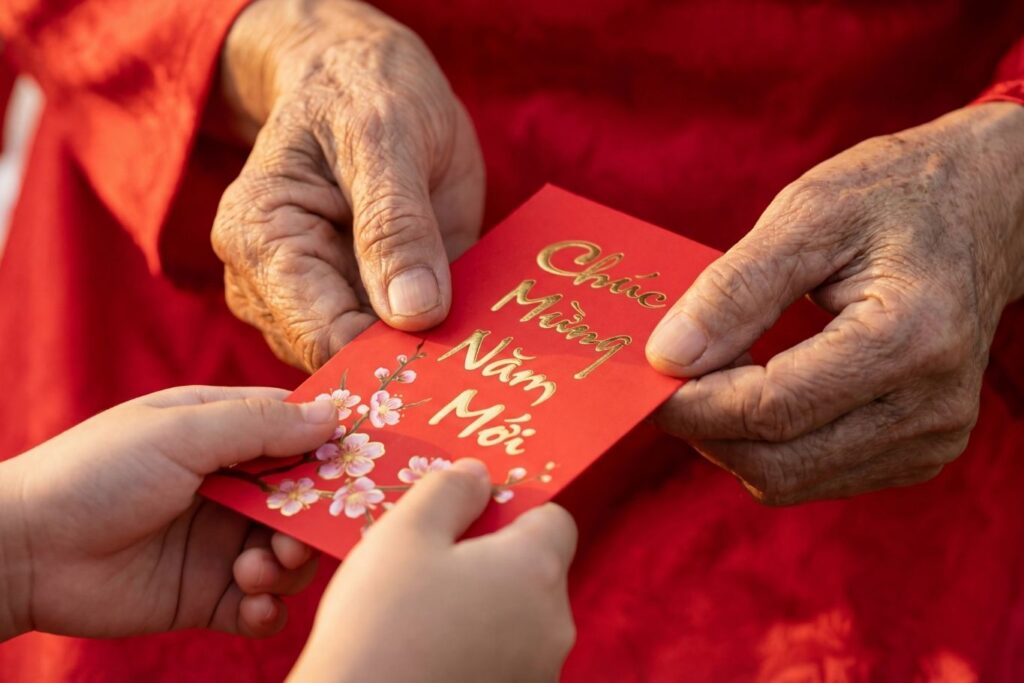
In Vietnam, few traditions capture the spirit of the Lunar New Year (Tết) as vividly as Lì xì—the custom of giving money in red envelopes as a symbol of luck, prosperity, and blessings for the year ahead. More than a simple gift, lì xì is a cultural gesture deeply rooted in family values, respect, and hope.
What Is Lì Xì?
“Lì xì” (often called lucky money) refers to money placed inside a small red envelope and given during Tết. The tradition is widely practised across Vietnam and is especially meaningful on the first days of the Lunar New Year, when families gather to celebrate renewal and fortune.
The red envelope itself is not chosen randomly. In Vietnamese culture, red symbolises luck, happiness, and protection against bad spirits. By giving money in a red envelope, the giver is symbolically passing on good fortune.
Origins and Cultural Meaning
The practice of giving lucky money has ancient roots in East and Southeast Asia. In Vietnam, the custom is closely associated with Tết, the country’s most important holiday. According to traditional beliefs, the money inside the envelope is not about wealth, but about warding off bad luck and welcoming prosperity.
Historically, elders would give coins wrapped in red paper to children to protect them from evil spirits during the New Year. Over time, coins became banknotes, and the simple red wrapping evolved into decorative envelopes featuring gold patterns, zodiac animals, and wishes for prosperity.
Who Gives and Receives Lì Xì?
During Tết, lì xì follows a meaningful social pattern:
- Elders give to children to bless them with health, growth, and success in school
- Adults give to parents and grandparents as a sign of gratitude and filial respect
- Employers may give to employees as a New Year’s wish for prosperity
- Married adults give to unmarried younger relatives as part of a family tradition
The act of giving is often accompanied by kind words such as wishes for good health, academic success, or happiness in the coming year.
How Lì Xì Is Given
The ritual of giving lì xì is as important as the envelope itself. Typically, it happens during the first morning of Tết, after children offer New Year greetings to their elders. Dressed in new clothes, they wish their grandparents and parents happiness and longevity, and in return, they receive the red envelopes.
The exchange is respectful and ceremonial. Both hands are often used when giving and receiving, showing politeness and sincerity.
How Much Money Should Be Inside?
There is no fixed amount for lì xì. The value is symbolic rather than material. Small amounts are perfectly acceptable, especially for children. What matters most is the gesture and the blessing it carries.
However, crisp new banknotes are preferred, as they represent a fresh start and good luck for the new year.
Modern Changes and Digital Lì Xì
In recent years, the tradition has adapted to modern life. With the rise of digital payments, many young Vietnamese now send lì xì through mobile apps and e-wallets. Despite this format change, the cultural meaning remains intact: sharing luck and goodwill at the beginning of the year.
Still, physical red envelopes remain beloved, especially within families, because they carry emotional and ceremonial value that digital transfers cannot fully replace.
Etiquette and Cultural Tips
If you are visiting Vietnam during Tết, observing proper lì xì etiquette is appreciated:
- Use red or gold envelopes
- Avoid giving unlucky amounts (such as those associated with misfortune)
- Present the envelope politely with both hands
- Include warm New Year wishes
It is also customary not to open the envelope immediately in front of the giver, as this could be seen as impolite.
More Than Money: A Symbol of Care
At its heart, lì xì is not about financial value but about relationships. It reflects respect for elders, love for children, and the Vietnamese belief in starting the new year with kindness and positive energy.
Each red envelope carries more than money—it carries hope, tradition, and the heartfelt wish that the coming year will be filled with happiness, health, and prosperity.