
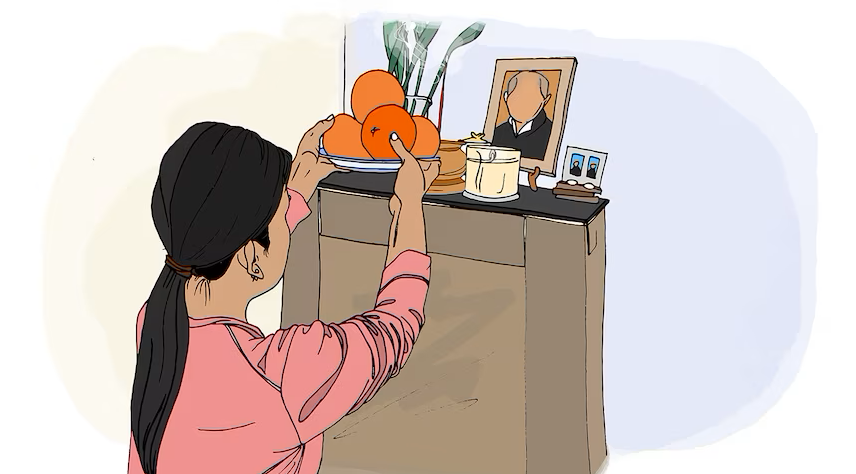
by Juan Inoriza
Introduction
Harmony, Ancestors, and the Nature of Moral Repair in Vietnam
In Western traditions, the concept of “sin” often involves violating divine laws and seeking forgiveness through feelings of guilt and penance. But in Vietnam, spiritual life is shaped by a more fluid and relational worldview, a rich blend of Buddhism, Taoism, Confucian ethics, and ancestor worship.
Here, morality is not so much about obedience to doctrine as it is about preserving harmony within the family, the body, the community, and the unseen spiritual realm. The dead are not gone: they are active presences, watching and guiding. A mistake does not offend a judging deity but disturbs the natural and ancestral balance. The remedy is not punishment, but mindful restoration.
In the story that follows, set in the old imperial city of Huế, a woman accidentally breaks a family heirloom, a porcelain vase kept at the household’s ancestral altar. What unfolds is not a crisis of guilt, but a quiet, deeply cultural journey toward repair.
The Broken Vase
I. The Slow Days of Spring
Lan rose before dawn, as she did every Saturday. Incense drifted from the ancestral altar in the main room, curling through the house like an invisible prayer. The chrysanthemums were still fresh, though five days had passed since the start of the lunar month. The air carried the damp scent of jasmine and old stone, March in Huế, when the rain whispers and the walls breathe history.
She swept the courtyard with her bamboo broom as her daughter Linh played nearby, giggling with a spinning top. Her laughter echoed off the tiled roofs like birdsong. Lan smiled. Modest as it was, her home held a fragile peace, like the surface of a pond at sunrise.
After breakfast, she decided to clean the altar. Her father had passed away three years before, and since then, she had taken responsibility for the shrine with quiet reverence. She climbed onto the low stool and began removing offerings and portraits, polishing the red lacquer wood with care.
II. The Accident
It took only a moment. As she turned, her elbow struck the blue porcelain vase, a family heirloom from her great-grandfather’s time. The vase trembled, danced slightly, then fell.
It shattered against the floor. Fragments of glaze scattered like flower petals, the water inside seeping across the tiles.
Lan froze.
Her mother, who had been stitching in the corner, stood at once. Her face paled. She knelt and picked up the shards slowly, as if collecting bones.
— Do you know how old this was? It can’t be replaced…
There were no raised voices. Just silence, and in that silence, something more than porcelain had cracked.
III. The Signs
That night, Linh developed a sudden fever. The bulb above the altar flickered and went dark. Lan tried to light the incense, but it refused to burn.
— There’s a bad sign, her mother whispered. The ancestors are unhappy.
Lan felt it too, not guilt, but a kind of ancestral shame, a sense of having failed something sacred and invisible. She remembered what the monk at the pagoda had once told her:
“There is no sin, only forgetfulness, and even that must be mended.”
IV. The Path to Balance
The next morning, she dressed in a pale grey áo dài and walked to Từ Hiếu Pagoda, past willow trees and over a stone bridge. The monks were chanting the Kinh Sám Hối, the Prayer of Repentance.
Lan knelt, pressed her palms together, and bowed.
“Dear Buddhas and Bodhisattvas, I broke something entrusted to me. May I return to mindfulness and repair what was disturbed.”
She did not seek forgiveness. She sought clarity and restoration.
Later, at the antique market, she found a simple white vase painted with plum blossoms. It was neither rare nor old, but it felt honest.
V. Reconciliation
That evening, Lan cleaned the altar with lotus water. She placed the new vase, arranged fresh fruit and tea, and invited her mother to join her.
Together, they lit incense. The flame rose steadily.
Lan whispered:
— Dear ancestors, I broke your keepsake. This vase I offer now, not as a replacement, but as a sign of my care. Please continue to watch over us.
Her daughter Linh came and placed a small flower beside the portrait of her grandfather.
— Grandpa still loves Mum, doesn’t he?
Lan smiled, a quiet peace settling over her like the evening light.
Afterword
Repair, not punishment
What Lan repairs in this story is not just a vase, but a relationship, with her ancestors, with herself, and with the subtle balance of things. In Vietnamese culture, mistakes are not met with wrath or guilt. They are met with attention, humility, and conscious action.
This story reflects a way of seeing the world where error is not a moral collapse, but a disturbance in the flow, and where restoration is always possible through sincerity and presence.
It reminds us that harmony, once disturbed, can be reclaimed, not through grand gestures, but through small acts of respect.
We do not need to be perfect.
We only need to return, gently, to what matters.