
Tradition, Flavour, and Cultural Symbolism
In Vietnam, few natural elements are as closely tied to tradition and culinary heritage as the dong leaf (lá dong). Known scientifically as Phrynium placentarium, this large, glossy leaf from the Marantaceae family (often referred to as the arrowroot or prayer-plant family) has played a quiet but essential role in Vietnamese culture for centuries. More than just a cooking material, it carries symbolism, history, and a sense of connection to nature that continues to shape Vietnamese life today.
Botanical Background and Harvesting
The dong plant is a perennial herb thriving in the humid, shaded undergrowth of Vietnam’s northern and central highlands. It flourishes in well-drained, fertile soil, often found at the edges of forests or cultivated in village gardens. The plant is characterised by its large, upright stems from which the prized leaves unfurl. These leaves can grow impressively large, often reaching over 40 cm in length and 20 cm in width, providing the perfect natural wrapper.
Harvesting dong leaves is a skilled task. The finest leaves for culinary use are selected just before they reach full maturity, ensuring they possess maximum flexibility and a deep, vibrant green colour without being tough or brittle. After harvesting, they are carefully bundled and transported to markets across the country, where their arrival, particularly in the lead-up to Tết, is a much-anticipated sign of the coming festivities.
A Natural Wrapper with Many Purposes
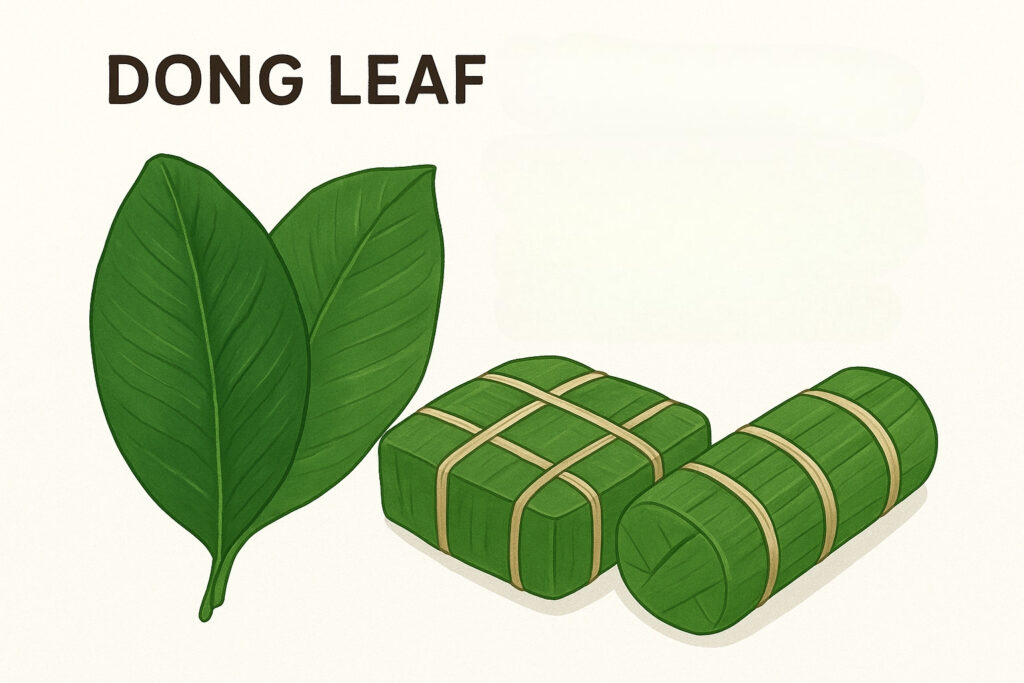
The dong leaf’s broad, flexible, and non-porous surface makes it ideal for wrapping food. It is most famously associated with bánh chưng (square sticky rice cakes) and bánh tét (cylindrical sticky rice cakes), the iconic dishes of Tết, Vietnam’s Lunar New Year festival.
Bánh chưng is said to represent the earth, with its square shape and ingredients of glutinous rice, mung beans, and pork wrapped carefully in layers of dong leaves.
Bánh tét, more common in southern Vietnam, carries the same filling in a cylindrical form, symbolising the moon.
When boiled for hours, the dong leaf not only holds the cake’s structure but also imparts a unique, subtle, and earthy fragrance—a scent that is distinctly nostalgic and irreplaceable. Its deep green hue seeps gently into the rice, giving the dish a natural colouring that enhances both its appearance and its flavour. Unlike banana leaves, which can be waxy and sometimes impart a slightly different aroma, dong leaves are celebrated for their neutral yet essential contribution.
Beyond these festive cakes, dong leaves have traditionally been used in markets as an eco-friendly packaging material, wrapping grilled meats, sticky rice, or other fresh goods long before plastic bags became common. Their strength, biodegradability, and innate antibacterial properties made them a practical and hygienic choice in everyday Vietnamese life.
Regional Variations and Lesser-Known Delicacies
While bánh chưng and bánh tét are the most nationally recognised uses, the dong leaf’s versatility features in other regional specialties. In some northern provinces, it is used to wrap a variety of steamed cakes (bánh) filled with sweet or savoury ingredients, each leaf lending its distinctive fragrance. Another lesser-known but cherished delicacy is cốm gói lá dong—young, green sticky rice flakes wrapped in dong leaf. The leaf keeps the cốm moist and absorbs its delicate milky flavour, creating a perfect harmony of fresh aromas.
Cultural and Symbolic Significance
The act of wrapping food in dong leaves goes far beyond convenience. In Vietnamese belief, the leaf represents cleanliness, protection, and preservation. Just as it shields the rice cakes during the long hours of boiling, it symbolises the safeguarding of family values and traditions.
During Tết preparations, multi-generational families gather to wash, trim, and fold dong leaves together. This ritual is as meaningful as the food itself—it is a time for passing knowledge from grandparents to parents and children, strengthening familial bonds, and reminding everyone of their roots. For many, the vibrant green of the leaf is also a potent symbol of spring, new growth, and Vietnam’s agrarian heritage, emphasising the importance of living in harmony with nature.
The Dong Leaf in Modern Vietnam
Today, even as modern packaging materials dominate urban markets, dong leaves retain their sacred place in Vietnamese culture. In the weeks leading up to Tết, markets bustle with people buying vast stacks of fresh leaves to prepare their holiday cakes. Vendors carefully sort, tie, and sell them in bundles, ensuring families have enough to honour tradition.
The continued use of dong leaves reflects not only a commitment to heritage but also a growing awareness of sustainability. As the world searches for alternatives to single-use plastics, Vietnam’s long history with natural, biodegradable packaging offers both inspiration and practical lessons. Contemporary chefs and food artisans are also rediscovering the dong leaf, using it to innovate new dishes while paying homage to traditional flavours, thus ensuring its relevance for a new generation.
Conclusion
The humble dong leaf may seem like a simple wrapper, but in Vietnam it is far more—a bridge between past and present, a vessel of unique flavour, and a enduring symbol of care and continuity. Whether steaming in a pot of bánh chưng during Tết, cradling a humble market purchase, or inspiring modern sustainable practices, the dong leaf remains a powerful reminder of the beauty and resilience of simple, natural traditions.