
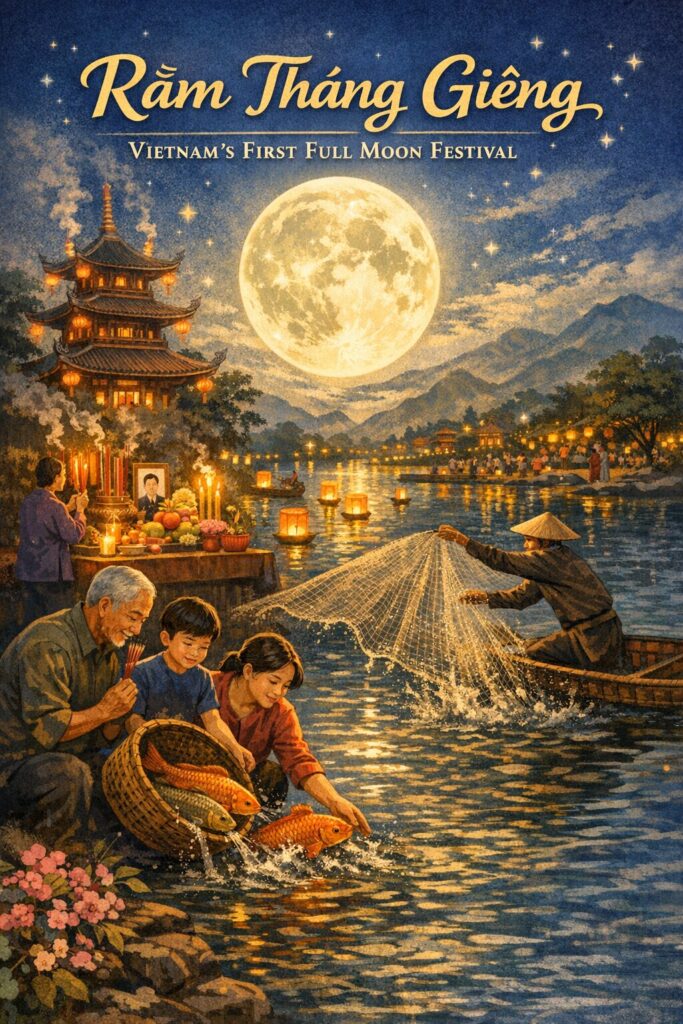
Each year, on the fifteenth day of the first lunar month, Vietnam marks Rằm Tháng Giêng, the First Full Moon Festival. Known formally as Tết Nguyên Tiêu, this observance falls shortly after Tết Nguyên Đán (Vietnamese Lunar New Year) and is widely regarded as one of the most spiritually significant days in the calendar.
While Tết is a time of reunion, renewal and celebration, Rằm Tháng Giêng turns the nation’s attention towards reflection, gratitude and prayer. It is a moment when the brilliance of the first full moon symbolises clarity, harmony and hope for the months ahead.
A Night of Light and Intention
The phrase Rằm Tháng Giêng translates literally as “Full Moon of the First Month”. In Vietnamese culture, each full moon carries spiritual meaning, yet the first full moon of the year is considered especially powerful. A well-known saying captures this sentiment:
Cúng cả năm không bằng Rằm Tháng Giêng
“Worship throughout the year is not equal to worship on the First Full Moon.”
The luminous moon is seen as a symbol of completeness and balance. As it rises, many families light incense on ancestral altars, offer fruit and flowers, and express wishes for health, prosperity and family harmony.
Rituals and Living Traditions
Rằm Tháng Giêng is not only about prayer inside the home or pagoda; it is also expressed through symbolic acts that connect people with nature.
One meaningful custom in some regions is the ceremonial release of fish (phóng sinh). Families purchase live fish—often carp—and release them into rivers or lakes as an act of compassion and merit-making. The gesture symbolises the freeing of suffering, the renewal of life and the hope that good deeds will bring blessings in return.
In rural communities, the first full moon can also be associated with auspicious outings connected to water, including early-year fishing. Casting a net or line at the beginning of the lunar year is sometimes seen as a symbolic invitation to abundance. A good catch under the first full moon is interpreted as a favourable omen for prosperity and sustenance in the months ahead.
Vegetarian meals are commonly prepared on this day, particularly among Buddhist families. Avoiding meat is viewed as a way of cultivating purity and compassion at the start of the year. Markets often bustle with people buying fresh fruit, sticky rice, sweet soups and flowers for offerings.
Buddhism and the Pagoda Tradition
Rằm Tháng Giêng has strong links with Vietnamese Buddhism. Throughout the country, temples and pagodas fill with devotees who come to pray, make offerings and seek blessings for the year ahead. The atmosphere is solemn yet hopeful: incense smoke rises into the night air as chants echo beneath the glow of the full moon.
Although it shares historical roots with the Chinese Lantern Festival, Vietnam’s celebration places greater emphasis on spiritual devotion and ancestral remembrance rather than lantern displays alone. The focus is inward as much as outward: purification of the mind, cultivation of virtue and renewal of intention.
Family, Ancestors and Cultural Continuity
Central to the festival is the enduring Vietnamese tradition of ancestor veneration. Homes are carefully arranged, altars refreshed and offerings prepared with sincerity. These rituals affirm a profound belief that the living and the departed remain spiritually connected.
In this way, Rằm Tháng Giêng reinforces family bonds across generations. It reminds people that prosperity is not measured solely in material success, but also in moral conduct, gratitude and filial respect.
A Festival of Hope
Coming so soon after Tết, the First Full Moon Festival serves as a gentle transition from celebration to contemplation. The excitement of the New Year gives way to thoughtful intention. Under the calm glow of the moon, individuals reflect on their aspirations and quietly commit themselves to a year of balance, compassion and mindful living.
Whether through prayer, releasing fish into flowing water, preparing vegetarian offerings, or casting nets in hopeful anticipation, Rằm Tháng Giêng remains a festival of light—not only in the sky, but within the human spirit. 🌕