
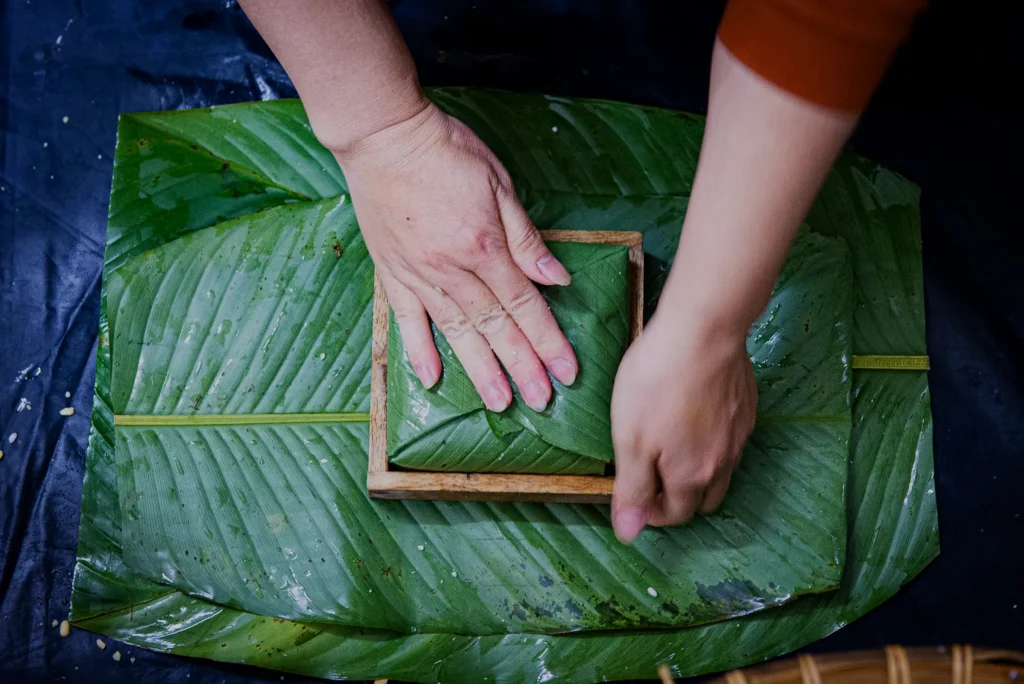
Chung – Gói Bánh Chưng
14 February 2026 (27th of Lunar December)
As the Lunar New Year approaches, homes across Vietnam begin to fill with a quiet, meaningful ritual: the wrapping of Bánh Chưng. More than just a traditional food, Bánh Chưng is a symbol of family, heritage, and continuity—an edible expression of the nation’s deepest cultural values during Tết.
Bánh Chưng are thick, square rice cakes made from glutinous rice, filled with stewed pork, mung beans, and sometimes eggs, then carefully wrapped in dong leaves. These leaves, from the Phrynium placentarium plant of the ginger family, give the cake its distinctive green colour and subtle aroma. After wrapping, the cakes are boiled slowly—often for up to 12–24 hours—allowing the fragrance of the leaves to soak into the rice and bind the ingredients into a dense, savoury whole.
Yet the true importance of Bánh Chưng lies not only in how they are made, but in how they are wrapped.
A Family Ritual, Not Just a Recipe
“Gói Bánh Chưng” (wrapping Bánh Chưng) is traditionally a collective activity. Grandparents, parents, and children gather together, sitting around low tables or mats, sorting rice, seasoning fillings, folding leaves, and tying the cakes with a string. Each person has a role: one washes the rice, another prepares the meat, while the elders often demonstrate the precise folding technique that keeps the square shape intact.
This shared preparation transforms cooking into a social and emotional event. Stories are told, family news is exchanged, laughter fills the kitchen, and generations connect through a practice passed down for centuries. The long boiling time—sometimes lasting through the night—becomes an opportunity to sit together, talk, drink tea, and welcome the coming year with warmth and reflection.
A Symbol of Tết and Vietnamese Identity
For many Vietnamese families, Tết would feel incomplete without Bánh Chưng placed on the ancestral altar and served during New Year meals. The cake’s square shape symbolises the Earth in ancient Vietnamese cosmology, reflecting harmony between humans, nature, and tradition. This symbolism is deeply rooted in the legend of Prince Lang Liêu, who offered Bánh Chưng to honour his ancestors and the land that sustained the people.
Because of this meaning, Bánh Chưng are not merely eaten—they are gifted. Families present them to relatives, neighbours, colleagues, and friends as a gesture of respect, gratitude, and good wishes for the new year. Offering Bánh Chưng is, in essence, offering a piece of home.
The Role of Dong Leaves in Tradition
Wrapping Bánh Chưng with dong leaves is essential both culturally and culinarily. The leaves protect the rice during the long boiling process, impart a natural green hue, and contribute a gentle earthy fragrance that defines the cake’s authentic taste. Beyond practicality, the use of natural leaves reflects the Vietnamese philosophy of living in harmony with nature—an idea especially prominent during Tết, a festival tied to renewal and seasonal cycles.
Preserving Heritage in Modern Times
Today, while some families buy ready-made Bánh Chưng due to busy urban lifestyles, many still insist on gathering to wrap them together at least once a year. Even younger generations who live in cities return home during the 27th or 28th day of the Lunar December to take part in the ritual. In doing so, they reconnect with their roots and ensure that the tradition continues.
In a rapidly modernising society, Gói Bánh Chưng remains a quiet act of cultural preservation. It teaches patience, cooperation, and respect for ancestors—values that define Vietnamese family life.
Ultimately, wrapping Bánh Chưng is not just about preparing food for Tết. It is about togetherness. It is about memory. And above all, it is about the enduring bond of family, gathered around a simple square cake that carries centuries of history, love, and hope for the year ahead.