
Extramarital Intimacy and the Reconfiguration of Modern Affection
1. Introduction
Vietnam’s major urban centres—Ho Chi Minh City, Hanoi and Da Nang—are witnessing an understated yet transformative shift in intimate behaviour. Increasing numbers of young, financially autonomous individuals are entering relationships with married partners, often with emotional investment rather than purely transactional motives. Although extramarital relationships are neither new nor uniquely Vietnamese, their present form reflects distinct historical, cultural and technological developments.
Despite public denunciation of infidelity, the phenomenon remains sufficiently common to affect marital stability, family cohesion and public-health outcomes. Yet public discourse in Vietnam tends to frame such relationships as individual moral failings rather than symptoms of larger social transitions. This paper argues that a more nuanced understanding is required—one attentive to digital environments, changing gender norms, economic pressures and evolving expectations of love.
2. An Illustrative Case: Mai’s Story
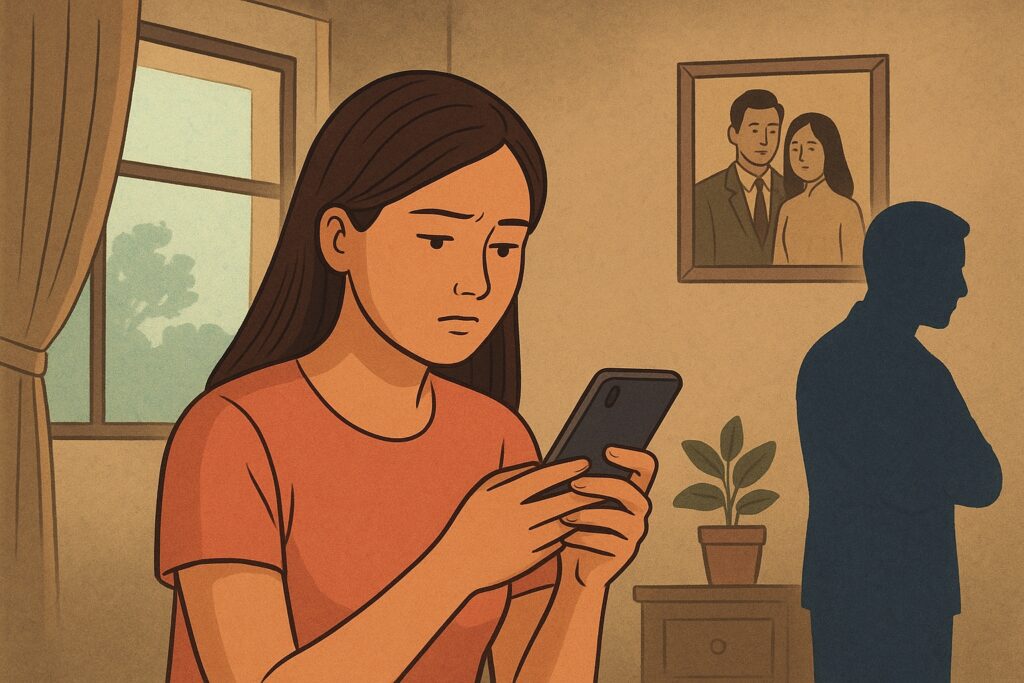
Mai, a 28-year-old software engineer in Ho Chi Minh City, describes her relationship with a married colleague not as a rebellion but as a search for emotional affirmation. Their arrangement emerged gradually through shared late-night project work and sustained digital communication. To Mai, the appeal lay in being “valued, understood, and emotionally supported”—terms that echo themes reported in qualitative research on extramarital relationships across Southeast Asia.
Her narrative illustrates several patterns that appear in current scholarship: emotional pragmatism, a desire for companionship amid urban isolation, and a willingness to balance moral uncertainty against the felt benefits of affection. While Mai recognises the ethical complexity of her situation, she frames her behaviour as part of a broader negotiation between intimate fulfilment and social norms.
3. Digital Platforms and the Normalisation of Secrecy
The rise of online communities has significantly altered the conditions under which clandestine relationships are formed and sustained. Vietnamese-language Facebook groups and anonymous forums dedicated to người thứ ba (the “third person”) attract thousands of participants who exchange advice, articulate grievances and receive emotional validation.
Digital ethnography indicates that these groups function as informal support networks, mitigating shame and social isolation—key deterrents to infidelity in earlier generations. They also facilitate the sharing of strategies for managing emotional boundaries, maintaining discretion and coping with jealousy triggered by a partner’s public family life. The existence and scale of these groups demonstrate how digital platforms reduce stigma, making clandestine arrangements more viable and less isolating.
4. Empirical Research on Extramarital Relationships in Vietnam
Although systematic national data remain limited, available research provides insight into the motivations and demographic patterns behind extramarital intimate behaviour.
Studies of Vietnamese married men have identified non-marital sexual relationships as a recurring pattern, shaped by marital dissatisfaction, workplace proximity and sociocultural expectations of masculinity. Broader Asian comparative studies point to similar variables: economic mobility, urban anonymity, increased exposure to global dating norms and the proliferation of opportunities for intimate contact outside marriage.
Vietnamese family data also reveal rising divorce rates, with infidelity consistently cited among the leading causes. While precise percentages vary by source, multiple legal and sociological analyses confirm that adultery contributes significantly to marital dissolution, particularly in urban settings. Additionally, public-health research highlights the heightened vulnerability to sexually transmitted infections associated with extramarital sex, especially in contexts where condom use within marriage is low.
5. Changing Gender Norms and Emotional Pragmatism
Economic modernisation has reshaped gender relations in Vietnam. Women’s rising participation in skilled employment, financial independence and urban living have expanded opportunities for relational autonomy. Younger cohorts—men and women—express preferences for emotional compatibility, communication and personal fulfilment, often diverging from traditionally Confucian ideals prioritising duty, familial harmony and self-sacrifice.
Psychological commentary within Vietnam suggests that some young adults view affection as a finite and negotiable resource, rather than the exclusive property of monogamous partnership. This shift does not imply a widespread rejection of fidelity, but rather a re-framing of intimate priorities in which the emotional needs of the individual can override inherited moral prescriptions.
6. The Social and Policy Implications
Extramarital relationships impose measurable costs. They can destabilise families, increase conflict, expose dependants to financial insecurity and inflict psychological harm on spouses and children. They may also exacerbate gender-based power asymmetries—especially when involving workplace hierarchies.
Despite these concerns, policy responses in Vietnam have traditionally focused on moral condemnation and punitive legal measures. Such approaches rarely address the structural conditions that foster clandestine relationships: lack of accessible marital counselling, limited public discussion of emotional wellbeing, workplace cultures with poorly defined interpersonal boundaries, and digital spaces devoid of ethical guidance.
A constructive policy response would incorporate:
- relationship and mental-health services accessible to young and married individuals alike;
- workplace regulation, particularly regarding intimate relationships within hierarchical structures;
- public education that integrates traditional values with modern psychological insights rather than positioning them in opposition.
7. Conclusion
Vietnam’s hidden relationship economy is neither a sign of cultural decline nor a trivial social curiosity. It is a window into complex negotiations between tradition and modernity, collective values and individual desires, offline expectations and online solidarities. Recognising these dynamics is essential for crafting effective, humane responses that strengthen family stability, support emotional wellbeing and acknowledge the lived realities of a rapidly changing society.
The phenomenon will not disappear through moralising discourse. It requires open, empirically informed dialogue—and policies grounded not in condemnation but in understanding.
References and Recommended Sources
Academic and Research Studies
- Nguyen, H. T. & Hoang, T. T. (2022). Marital Satisfaction and Extramarital Behaviour among Married Men in Vietnam. Journal of Asian Social Science.
- Liu, H. & Chan, A. (2018). Infidelity in East and Southeast Asia: A Systematic Review. Journal of Family Issues.
- Pham, Q. A. (2020). Urbanisation, Social Change and Transforming Intimacies in Vietnam. Asian Anthropology.
- UNFPA Vietnam. (2019–2022). Reports on family change, demographic transitions and divorce trends in Vietnam.
- World Health Organization (WHO), Regional Reports for the Western Pacific. Analysis on sexual behaviour and STI risk in marital and extramarital contexts.
Sociological & Psychological Analyses
6. Hoang, L. A. (2011). Gender, Mobility and Intimacy in Contemporary Vietnam. Gender & Society.
7. Le, T. M. H. (2020). Changing Attitudes Toward Marriage, Love and Fidelity among Vietnamese Youth. Vietnam National University research series.
Digital and Cultural Sources
8. Vietnamese media analyses on social-media groups for người thứ ba, including reports from Tuổi Trẻ, VnExpress International and Thanh Niên (2018–2025).
9. Ethnographic accounts of online support communities and relationship discourse in Vietnam’s digital environment (various digital culture studies).
Family and Divorce Data
10. Vietnam Ministry of Justice and General Statistics Office (GSO): Annual reports on marriage, divorce and family stability, with sections on the prevalence of infidelity as a contributing factor.