
Southeast Asian Currencies Under Trump’s Second Mandate: Evolution, Risks, and Scenarios (June 2025)
By Juan Inoriza
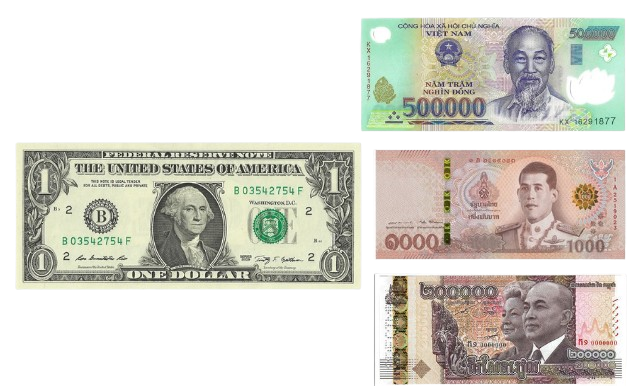
The return of Donald Trump to the White House has generated significant waves across international financial markets. Currencies within Southeast Asia, specifically the Thai baht, Vietnamese dong, and Cambodian riel, now find themselves navigating a complex landscape defined by volatility, potential opportunities, and the necessity for strategic adjustment. As protectionist trade measures and transactional diplomacy reshape global investment and trade patterns during this second Trump administration, these currencies serve as indicators of the region’s challenging position between maintaining economic stability and managing geopolitical unpredictability.
The Trump Effect: Currency Evolution and Immediate Fallout
Following President Trump’s inauguration in January, the United States dollar experienced a sharp increase in value. This surge was largely driven by market anticipation of inflation stemming from new tariffs and significant shifts in foreign policy. The strength of the dollar placed considerable pressure on emerging market currencies. The Thai baht weakened noticeably, influenced by concerns over capital leaving the country and declining confidence within its manufacturing sector. Concurrently, the Vietnamese dong, operating under a system of managed flexibility, depreciated by approximately 4% against the dollar. Vietnam’s substantial and ongoing trade surplus with the United States, reaching an estimated $12.2 billion in May 2025, rendered it especially susceptible to market speculation regarding potential widespread US tariffs. In Cambodia, the riel, which maintains an unofficial peg around 4,100 KHR/USD, faced subdued pressures within its highly dollarized economy, though this situation increased the vulnerability of rural households to risks associated with currency substitution.
However, this initial period of disruption also provided some advantage to the “China Plus One” manufacturing diversification strategy, yielding modest benefits for Thailand and Vietnam. As companies sought alternatives to China, a mild recovery was observed in the value of the baht and the dong. Cambodia, lacking comparable structural advantages due to its heavy reliance on US dollar inflows, remained disproportionately sensitive to fluctuations in American monetary policy.
Comparative Currency Performance: Baht, Dong, Riel, Euro and Yen (January–June 2025)
| Currency | January Rate vs USD | June Rate vs USD | Year-to-Date Change |
| Thai Baht (฿) | ≈ ฿33.9/USD | ≈ ฿32.5–33/USD | +5% (stronger) |
| Vietnamese Dong | ≈ 25,000 VND/USD | ≈ 26,100 VND/USD | -4% (weaker) |
| Cambodian Riel | ≈ 4,100 KHR/USD | ≈ 4,100 KHR/USD | Stable (high dollarisation) |
| Euro (€) | ≈ €1.036/USD | ≈ €1.152/USD | +11% (stronger) |
| Yen (¥) | ≈ ¥156/USD | ≈ ¥144/USD | +7.7% (stronger) |
The baht’s 5% appreciation can be attributed to incoming capital and a resurgence in tourism. Conversely, the dong faced downward pressure due to the dollar’s strength and persistent anxieties surrounding tariffs. In contrast, the euro and yen, supported by larger, more developed economies, recorded more significant gains. This reflected a trend among international investors seeking safer assets and improved returns outside the dollar sphere.
The Federal Reserve: Central to the Currency Narrative
Throughout 2025, the United States Federal Reserve has maintained its benchmark interest rate within the range of 4.25% to 4.50%. This stance reflects caution prompted by ongoing inflationary pressures and global geopolitical instability. Chair Jerome Powell highlighted that tariffs implemented by the administration were already contributing to inflation, and were likely to continue doing so, reinforcing the argument for keeping rates steady despite some internal calls for reduction. Members of the Federal Open Market Committee, such as Thomas Barkin, President of the Federal Reserve Bank of Richmond, cautioned against premature rate cuts, noting the prolonged absence from the inflation target and identifying tariffs as a persistent catalyst.
For Southeast Asia, the Federal Reserve’s forthcoming decisions on interest rates are critically important. A prolonged period of elevated US rates sustains demand for the dollar, increasing the cost of capital for emerging economies and raising the expense of servicing debt denominated in dollars. Should the Federal Reserve proceed with anticipated rate reductions later in 2025, currencies in the region could experience a recovery, though this would likely be contingent on a simultaneous easing of international trade tensions.
Structural Risks: Trade, Dollarisation, and Geopolitics
- Trade Dependency: Economies within the Association of Southeast Asian Nations (ASEAN) remain fundamentally oriented towards exports. Analysis from Oxford Economics suggests non-China Asian exports could decrease by 3% if tariff escalations occur. Vietnam and Cambodia are particularly exposed due to their reliance on apparel and electronics manufacturing. Furthermore, the potential withdrawal of Generalised System of Preferences (GSP) benefits, valued at $11.7 billion in 2023, poses a significant threat to the trade viability of Thailand and Cambodia.
- Dollarisation Dilemmas: Cambodia’s predominantly dollarised economy confronts substantial challenges, including the loss of seigniorage revenue and heightened inflation risk stemming from a robust dollar. A strong dollar increases the attractiveness of holding hard currency and can elevate volatility. Vietnam’s partially dollarised system continues to depend on effective local monetary strategies, while Thailand’s economy, though more insulated, is not entirely immune to these dynamics.
- Geopolitical Tightrope: The renewed tensions between the United States and China under President Trump compel Southeast Asian nations to engage in a delicate balancing act. Transactional approaches to diplomacy can undermine regional security agreements, while shifts in trade patterns force countries to weigh economic opportunities against strategic caution. The effectiveness of a nation’s diplomatic manoeuvres now has a direct bearing on market sentiment towards its currency.
Scenarios: Pathways for Resilience
- Pessimistic Outlook: An escalation in US tariffs combined with cuts to GSP benefits could precipitate sharp currency depreciations, flight of capital, and higher inflation driven by increased import costs. Under such conditions, Cambodia’s riel could be further marginalised by dollar usage, and the Thai baht might face speculative pressure, particularly during periods of low tourist activity.
- Optimistic Adaptation: Conversely, the strengthening of intra-ASEAN trade frameworks like the ASEAN Economic Community (AEC) and the Regional Comprehensive Economic Partnership (RCEP), alongside trade diversification strategies pursued by the European Union and Japan, offers avenues for resilience. Vietnam stands to gain significantly as a primary destination for foreign direct investment diverted from China, potentially bolstering the dong. Thailand could accelerate efforts to access markets beyond the United States, and Cambodia might initiate substantive measures to reduce dollarisation as part of broader financial sector reforms.
Conclusion: Writing a New Currency Script
By the middle of 2025, Southeast Asia stands at a pivotal juncture. The Thai baht and Japanese yen have strengthened, buoyed by capital inflows and resurgent tourism, while the euro has surged on safe-haven demand. Conversely, the Vietnamese dong has declined, and the Cambodian riel remains stable but is fundamentally exposed. With the trajectory of the US dollar heavily influenced by Federal Reserve monetary policy and global trade flows reshaped by Trump-era initiatives, the region must move beyond reactive adjustments towards a proactive strategic approach.
The future trajectory of these currencies, whether they maintain their current levels or gain renewed momentum, will be determined by the success of efforts to diversify trade partnerships, foster greater regional monetary cooperation, and carefully manage the process of de-dollarisation where applicable.
As one market strategist succinctly put it: “When Trump declares an intention, financial markets pay close attention. The crucial question now is whether Southeast Asia possesses the capacity to author its economic narrative.”
📖 Read more
LinkedIn: https://www.linkedin.com/pulse/100-days-trump-20-disruption-disorder-world-flux-juan-inoriza-z0rwc/
Trump 2.0 – Politics, Power and the World System by Juan Inoriza
✅ Available now on Amazon KDP, in Softcover, Hardcover, and eBook
🌍 Published in English, Spanish, and German
Get your copy today in English, German, and Spanish (Hardcover, Paperback & eBook).
ENGLISH https://www.amazon.com/dp/B0F5HV2ZQD
GERMAN https://www.amazon.de/dp/B0F5HLSJNH
SPANISH https://www.amazon.es/dp/B0F5MTS64S
#Trump2 #Geopolitics #WorldSystem #AmericaFirst #GlobalPolitics #InternationalRelations #BookAnnouncement #ForeignPolicy #PostLiberalOrder
New Book Series Now Available!
Doing Business in Southeast Asia
✅ Available now on Amazon KDP, in Softcover, Hardcover, and eBook
🌍 Published in English, Spanish, and German
📖 Learn more
https://www.linkedin.com/pulse/new-book-series-now-available-juan-inoriza-4pjcc
Or get your copy here
Doing Business in Vietnam
Doing Business in Thailand
Doing Business in Cambodia
#SoutheastAsia #InternationalBusiness #Vietnam #Thailand #Cambodia #MarketEntry #GlobalTrade #BusinessStrategy #NewRelease #DoingBusinessAbroad