
1. Introduction
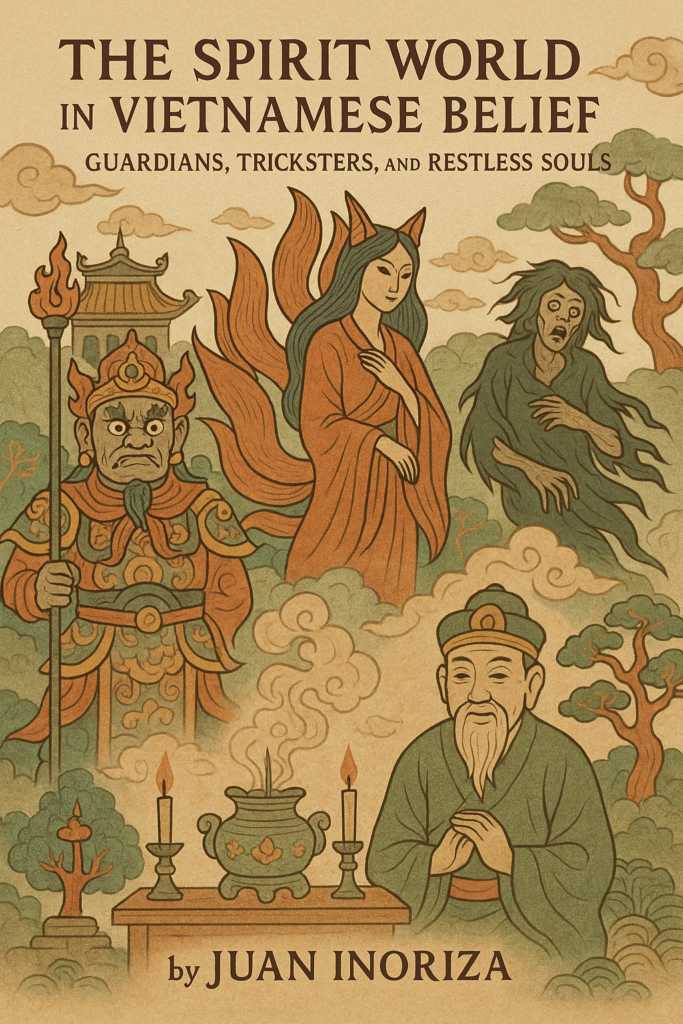
Vietnamese spirituality is deeply intertwined with animism, ancestor worship, and Buddhist, Taoist, and Confucian influences. The belief in spirits (linh hồn) is a fundamental aspect of Vietnamese folklore, shaping rituals, festivals, and everyday life. Spirits can be benevolent protectors, mischievous tricksters, or vengeful entities seeking justice. These supernatural beings often interact with humans through offerings, rituals, and traditions meant to maintain harmony between the living and the spiritual world.
This article examines six major categories of spirits in Vietnamese folklore:
- Thần (guardian spirits and deities)
- Ma Quỷ (ghosts and malevolent spirits)
- Ông Kẹ / Ông Ba Bị (spirits that frighten children)
- Hồ Ly Tinh (fox spirits and shapeshifters)
- Long Mạch (earth dragons and feng shui spirits)
- Vong Hồn (wandering souls and ancestral spirits)
Each section explores their roles, associated legends, and the traditions linked to their worship or avoidance.
2. Thần (Guardian Spirits and Deities)
Definition and Role
The Thần are supernatural beings that act as protectors of individuals, families, communities, and natural landmarks. They can be deified historical figures, local deities, or nature spirits associated with mountains, rivers, and trees. Vietnamese folk religion includes thousands of Thần, some of whom have been officially recognised by the state through imperial decrees.
Legends and Traditions
2.1. The Kitchen Gods (Táo Quân)
One of the most well-known Thần is Táo Quân, the Kitchen Gods. According to legend, three household deities oversee domestic affairs and report to the Jade Emperor (Ngọc Hoàng) at the end of each lunar year. To ensure a favourable report, families offer sacrifices, burn paper effigies, and release carp into rivers, believing that the fish will carry the deities to heaven.
2.2. Thành Hoàng (Patron Deities of Villages)
Villages often have a Thành Hoàng, a guardian deity who protects the community from misfortune. These spirits can be legendary warriors, scholars, or even emperors. Temples are built in their honour, and festivals are held with sacrifices, incense, and processions.
3. Ma Quỷ (Ghosts and Malevolent Spirits)
Definition and Role
The Vietnamese differentiate between Ma (ghosts) and Quỷ (demons). Ma are souls of the dead that have not found peace, while Quỷ are more dangerous entities often associated with misfortune and supernatural harm.
Legends and Traditions
3.1. The Legend of the Weeping Ghost Bride
A common ghost story tells of young women who die before marriage and return as wandering spirits, searching for a husband. Families sometimes conduct posthumous weddings (đám cưới ma) to appease these spirits, ensuring they do not bring misfortune.
3.2. Hungry Ghosts and the Ghost Festival (Lễ Vu Lan)
Inspired by Buddhist beliefs, the Lễ Vu Lan festival is held during the seventh lunar month to honour ancestors and provide offerings for lost souls. Families prepare food, burn paper money, and pray for spirits who lack descendants to care for them.
4. Ông Kẹ / Ông Ba Bị (Spirits That Frighten Children)
Definition and Role
These spirits are used in folklore to discipline children. Ông Kẹ is often described as a shadowy figure lurking in the dark, while Ông Ba Bị is believed to carry a sack, taking away misbehaving children.
Legends and Traditions
4.1. The Whispering Spirit of the Night
According to legend, Ông Kẹ whispers to children in the dark, luring them away from home. Parents leave lights on or burn incense to ward off this spirit.
4.2. The Three-Bag Man (Ông Ba Bị)
A variation of this legend speaks of a supernatural figure who carries three sacks, each containing a lost child. Some folklore suggests this tale originated from real-life kidnappings used as cautionary stories.
5. Hồ Ly Tinh (Fox Spirits and Shapeshifters)
Definition and Role
Hồ Ly Tinh are fox spirits capable of transforming into beautiful women to seduce or manipulate humans. In Vietnamese folklore, they are often depicted as mischievous, though some stories portray them as capable of love and loyalty.
Legends and Traditions
5.1. The Enchanted Scholar
A tale tells of a scholar who marries a mysterious woman, only to discover that she is a fox spirit. In some versions, he drives her away through exorcism; in others, she remains loyal despite her supernatural nature.
5.2. Rituals to Detect Fox Spirits
Monks and spiritual masters use spells, charms, and mirrors to reveal fox spirits. It is believed that a Hồ Ly Tinh will fail to cast a reflection or will have a tail hidden under its clothing.
6. Long Mạch (Earth Dragons and Feng Shui Spirits)
Definition and Role
The Long Mạch (Dragon Veins) are spiritual energy lines within the land. Disrupting them through construction or land modification can lead to misfortune.
Legends and Traditions
6.1. The Golden Turtle of Hoàn Kiếm Lake
The legend of Emperor Lê Lợi and the divine sword returned to the Golden Turtle God symbolizes respect for Long Mạch.
6.2. Feng Shui Rituals to Appease the Land
Before building a house, geomancers (thầy địa lý) perform ceremonies to ensure harmony with the dragon veins. Offerings to land spirits are common.
7. Vong Hồn (Wandering Souls and Ancestral Spirits)
Definition and Role
Vong Hồn are spirits of the dead who remain attached to the mortal world. Ancestors who receive proper offerings become protective spirits, while neglected ones may bring misfortune.
Legends and Traditions
7.1. The Returning Spirit of the Hungry Ghost
A story tells of a soldier who died in battle and returned to beg his family for offerings, only to be ignored, leading to supernatural misfortunes.
7.2. Ancestral Altars and Worship
Every Vietnamese household maintains an ancestral altar where offerings of food, incense, and paper money are made to ensure the well-being of deceased relatives.
8. Conclusion
Vietnamese spiritual beliefs maintain a delicate balance between respect, fear, and veneration of the unseen world. From guardian deities to vengeful ghosts, these spirits remain a vital part of folklore, shaping cultural practices and community traditions.